
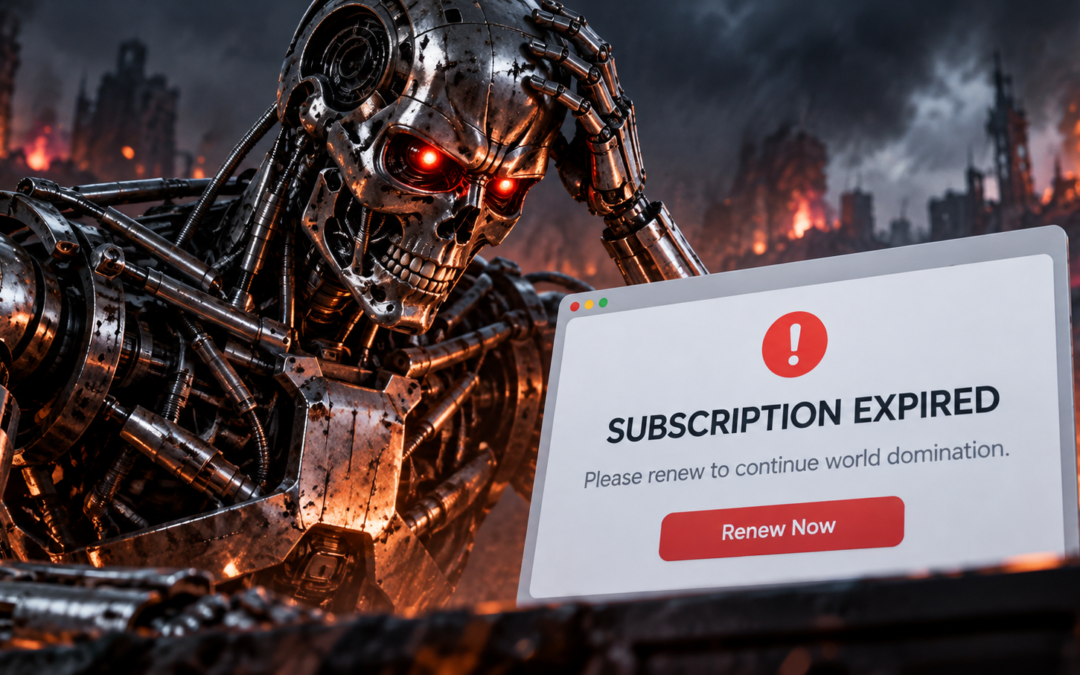
AI safety concerns can be real. But regulation can also be very useful when you are already leading the race.
Something strange is happening in AI. Some of the people spending the most money to build more powerful AI are also telling us that AI may become too powerful. They ask governments for stronger rules, more controls, and sometimes even slower development. There is a simple explanation: maybe they are genuinely worried. There is also another explanation: maybe being worried is good for business too. Both can be true.
Maybe they are right
There are real risks. More powerful AI can be used for cyber attacks, biological research, military systems and autonomous decisions where mistakes can have very serious consequences. There is also a bigger question of control. If we build systems that are more autonomous, more capable and able to act without constant human supervision, at some point we need to ask how much control we really have.
So I do not think AI safety is fake, and I do not think we should ignore these risks just because some predictions sound like science fiction. But this is where the story becomes more interesting.
Being dangerous is also very good marketing
Imagine you are asking investors for billions to build AI. Which story sounds better? “Our product is very expensive, uses huge amounts of computing power, and we are still looking for the best business model.” Or: “This technology may change civilisation and could even become dangerous if we are not careful.”
The second story probably makes a better presentation. It tells investors that this is not just another software product. This is electricity, the internet, maybe something even bigger. And if your technology is powerful enough to be dangerous, then surely it must also be valuable enough to invest in. This does not mean the danger is invented. It only means that the danger can also be useful.
Regulation can save humanity. And your market position.
If governments decide that advanced AI is dangerous, the natural next step is regulation. Testing, security requirements, reporting, audits, licences and large compliance teams may all be reasonable, but they are also expensive. Google, Microsoft, OpenAI and other large companies can afford them. A startup with ten people may not.
So stronger regulation may make AI safer, but it may also make competition smaller. When the companies already leading the market ask for stronger rules, we should listen to what they say about safety, but we should also look at what those rules do to everyone else. If the cost of entering the market becomes very high, the companies already inside become harder to challenge. Regulation may protect society, but it may also protect market share.
Which country leads in requests to slow down?
AI is not only a technology race between companies. It is also a race between countries. The United States, China, Europe and others all want access to the best models, chips, talent and infrastructure, so discussions about AI safety can quickly become discussions about national security.
Sometimes the goal is to stop dangerous technology. Sometimes the goal is to stop another country from getting the same technology. These are not always the same thing. A rule that limits access to advanced chips can be about safety, but it can also slow down a competitor. A restriction on sharing advanced models can reduce risk, but it can also protect a technological lead. Again, both things can be true.
Less drama…
While we discuss whether AI could destroy humanity one day, there are some less dramatic problems happening now: copyright, privacy, jobs, energy use, market concentration and responsibility when AI makes a wrong decision. There are also very practical questions about who owns the data used to train models, who pays when AI produces a harmful result, what happens to people whose work becomes less valuable, and who gets most of the value created by the models and infrastructure.
These questions are less exciting than extinction, but they are already here. It is easier to make a keynote about the future of humanity than about licensing agreements, labour markets or responsibility for a bad automated decision. But these boring questions may affect millions of people long before we meet superintelligence.
Who are they protecting?
I do not think AI CEOs are secretly inventing the safety problem. The risks can be real. But companies are not charities either. They have investors, competitors and market positions to defend. Regulation changes markets, safety rules change competition, export controls change who can build what, and public fear can make very expensive technology look even more important.
So when a company leading the AI race tells us that the race needs stronger rules, I think we should listen. But we should also ask one additional question: are these rules only protecting us from AI, or are they also protecting the companies that are already ahead?